
Empirical evidence based on the South Korean economy suggests that the current structure of the paid care sector, rigid work arrangements, and entrenched gender norms may have pushed the South Korean economy into a state in which there are tensions between promoting women’s labor force participation and gender equality on one hand and meeting the growing demand for caregiving on the other.
EXTENDING THE CWE-GAM WORK BEYOND 2020: PARTNER INSTITUTION SNU LAUNCHES THE NEW CENTRE FOR TRANSNATIONAL MIGRATION AND SOCIAL INCLUSION IN SOUTH KOREA
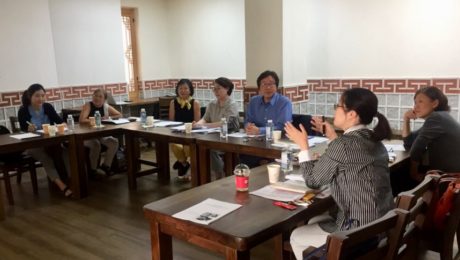
The Care Work and the Economy (CWE-GAM) Project partner Seoul National University (SNU) launched the new Centre for Transnational Migration and Social Inclusion this September. The Centre hopes to ensure that the research and analysis undertaken on care work and the relationships developed with advocacy groups and policymakers by the CWE-GAM Project team in Seoul will lead to long-lasting impacts in the country. It plans to build on research and policy advocacy initiatives undertaken by the CWE-GAM Project in South Korea since 2017. These include a national survey of paid care workers that includes a 24-hour time use diary; a nationally representative household survey of families responsible for caring for children and/or elderly; and in-depth interviews with caregivers and care recipients. These datasets provide rich information on paid caregivers – illuminating their working conditions, wellbeing, and providing detail on the types of activities they undertake, as well as on households and how they arrange care, provide care, and share care responsibilities.
The CWE-GAM project is also estimating the care economy in South Korea in order to give a full picture of caregiving services provided by unpaid and paid caregivers in the country. Measuring the aggregate time and value of unpaid caregiving is an important step in recognizing the work of unpaid caregivers and how this labor contributes to the economy as well as the potential for developing the paid care sector. Measuring the aggregate paid care sector is an important step in better understanding the extent to which they complement and/or substitute for some of the unpaid care provided by families. A signature output of the project is a set of gender-sensitive macroeconomic tools to guide country-specific decisions on fiscal policies and public investments to reduce and redistribute unpaid care work in South Korea.
Seoul National University recognizes that the recent experience of South Korea in addressing growing care needs, alongside the goal of attaining gender equality and women’s economic empowerment provide important lessons to other countries. South Korea has the highest life expectancies and the lowest fertility rate in the world, making the need for developing a comprehensive care system to effectively and compassionately meet society’s childcare and elderly care needs and to promote a more inclusive society more urgent than ever.
The new Centre for Transnational Migration and Social Inclusion will build on the work of the Care Work and the Economy Project to advance the issues of care and social inclusion by:
1) continuing to produce new research to fully understand the nature of care work and care workers (focusing on women and migrant workers);
2) developing a social inclusion watch to help measure and continuously evaluate social inclusion in the country; and
3) becoming a hub and cultivating a network of researchers, advocacy groups, and policymakers all working together to address care and social inclusion.
The launch of the Centre for Transnational Migration and Social Inclusion is an exciting step in ensuring the Care Work and the Economy Project has long lasting impact in South Korea, and that the rich data generated by the project will continue to be used to evaluate the status of care and care workers over time. The new Centre at SNU is an innovative way for an academic institution to engage with policymakers and the gender equality and workers’ rights advocates on the front-lines driving change. By taking on the role as convener on the issue of care and social inclusion, the Centre will enhance the quality of its research by engaging partners who are experts in the local political realities as well as develop the network necessary to ensure its research is used to inform policy development and decision-making.
For more information on the Centre for Transnational Migration and Social Inclusion at Seoul National University and to support their work, please email: careworkeconomy@american.edu.
The Effects of Public Social Infrastructure and Gender Equality on Output and Employment: The case of South Korea
According to the Global Gender Gap Index of the World Economic Forum (2018), South Korea is one of the lowest ranked countries in the world in terms of “Economic Participation and Opportunity” (124th out of 149 countries) as of 2018. The Global Gender Gap Index also shows that South Korea ranks 88th in terms of female labor force participation and 121st in terms of gender wage equality for similar work. The average wages of women in South Korea are on average 36.7% lower than average male wages (as of 2012, own calculations based on World Klems (2014) database). These statistics reflect that there is a significant economic gender gap in South Korea despite the fact that the country is now classified as a high-income economy. Moreover, the underdeveloped care infrastructure and reliance on unpaid care labor of women is posing serious demographic and social sustainability challenges in an aging society.
Existing research on the effects of public spending show a stronger positive effect of public spending in social care and education on female employment as well as total employment compared to public investment in physical infrastructure (Antonopoulos et al., 2010; Ilkkaracan, Kim and Kaya, 2015; Ilkkaracan and Kim, 2018; De Henau et al., 2016; Onaran, Oyvat and Fotopoulou, 2019a). These employment effects have further effects on the economy and the wellbeing of the society, as microeconomic studies across the board attest that a larger share of women’s income compared to that of men’s, is spent to satisfy the needs of the household (Blumberg, 1991; Antonopoulos et al, 2010; Pahl, 2000) and a possible increase in their income leads to increased spending on children’s education and wellbeing (Vogler and Pahl, 1994; Lundeberg et al. 1997; Cappellini, Marilli and Parsons, 2014). Onaran, Oyvat and Fotopoulou (2019a) confirm this finding at the macroeconomic level for the case of the UK. These consequently have further demand and supply side effects on output, productivity and employment (Onaran, Oyvat and Fotopoulou, 2019a; Seguino, 2017).
Oyvat & Onaran (2019) examines the short-run and medium-run impact of public spending in social infrastructure, defined as expenditure in education, childcare, health and social care on aggregate output and employment of men and women for the case of South Korea. They present a gendered Post-Kaleckian theoretical macroeconomic model. The authors estimate the macroeconomic effects of social expenditure using a vector autoregression (VAR) analysis for the period of 1970-2012. The results show that an increase in the public social infrastructure significantly increases the total non-agricultural output and employment in South Korea both the short and medium-run. Moreover, higher social infrastructure expenditure increases female employment more than male employment in the short-run and raises both male and female employment in the medium-run due to increasing aggregate output. Finally, estimates show that the South Korean economy is wage-led and gender equality-led in the short-run, hence overall equality-led, although the effects are economically small in comparison to the strong effects of increases social infrastructure spending, and become insignificant in the medium-run. The results indicate that sustainable equitable development and a substantial increase in employment requires a mix of both labor market and fiscal policies.
This paper will be available December 2019
- Published in Gender-Aware Macromodels, Policy, Rethinking Macroeconomics, South Korea
The Provision of Elderly Care and the Macroeconomy
The dramatic increase in life expectancy in most developed and developing countries over the last few decades has led to renewed discussions around elderly care policy options, and the debates are expected to intensify as the ratio of elderly to working-age adults continues to rise. According to United Nations, the share of people aged 60 years or over is growing faster than all younger age groups. Older segments of the world population are expected to double by 2050 and to more than triple by 2100. In addition to these demographic shift, contemporary societies are still characterized by prevalent gender inequality. One aspect of gender inequality is the unequal intra-household division of labor, which is particularly important for the analysis of care policies: women still do most of the unpaid care work.
Brun et al (2019) develops an overlapping-generation model to analyze the economic effects of increasing elderly care needs and evaluate different care arrangements, including the prevalence of unpaid care work. They model the demand of care as being complementary to elders’ consumption. This complementarity increases over time, as retired households become older, making the demand for care more inelastic. They analyze how increasing care needs affect key economic aggregates, such as savings, the gendered provision of paid and unpaid care, and the female labor market participation. Finally, they use the model to study the effects of the secular increase in women’s labor supply that took place between the 70s and the 90s on the provision of care, and evaluate alternative social arrangements, e.g. market-based vs publicly provided care, that so far have only partially replaced the unpaid care traditionally provided by women.
The paper will be available December 2019
- Published in Rethinking Macroeconomics, South Korea
Bringing Together Research, Civil Society, and Policy Communities to Advance the Policy Discussion on Care in South Korea
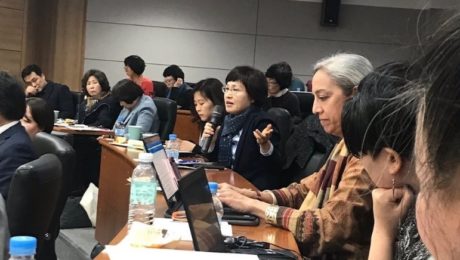
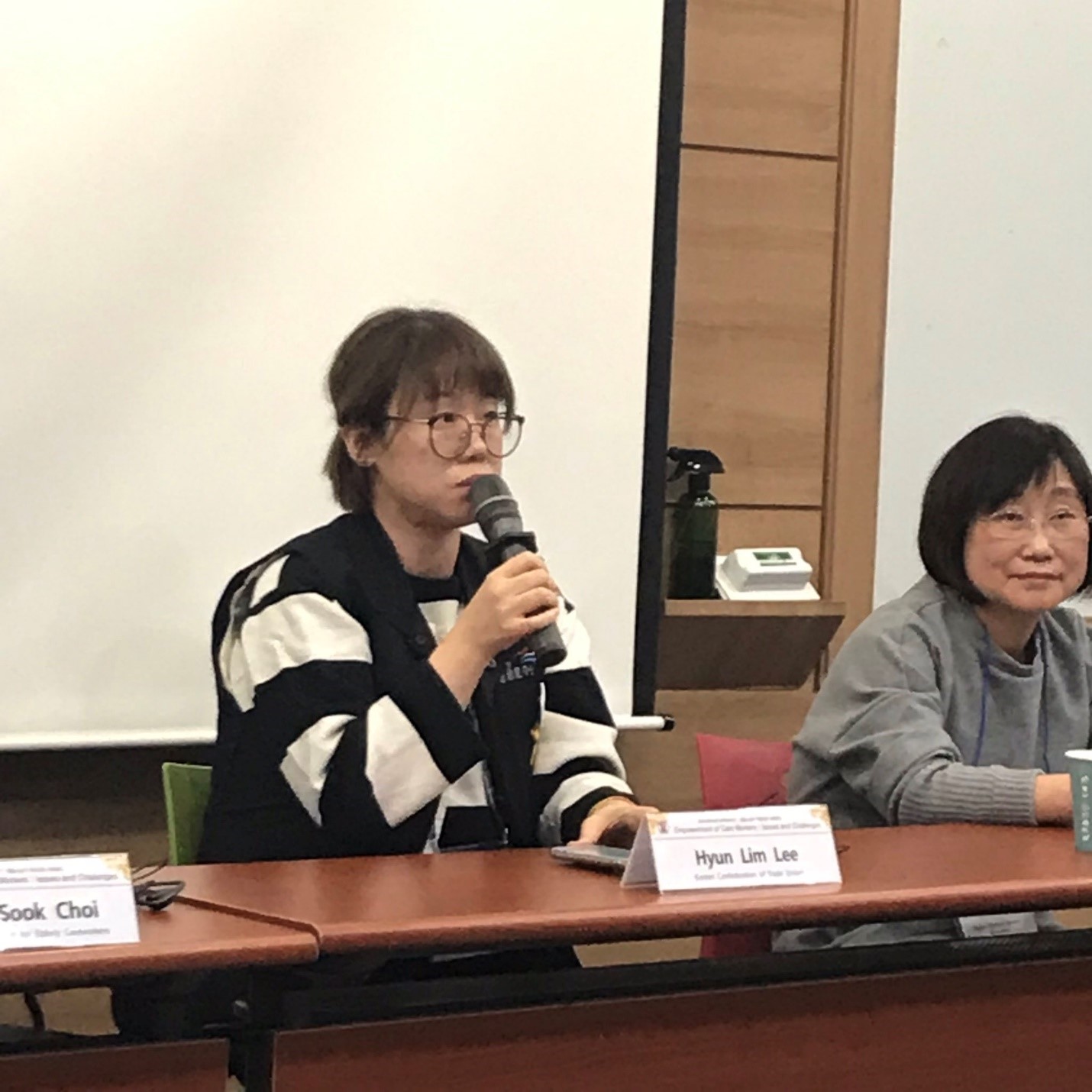 Hyun Lim Lee, kindergarten teacher and organizer for the Childcare Workers Chapter of the Korean Confederation of Trade Unions, stood in front of the room full of civil society organization representatives and Korean and international researchers. She is passionate about her job as a kindergarten teacher and passionate about the need to improve working conditions for caregivers in South Korea. She told the group about the challenges she faces as a kindergarten teacher, explaining how the high child-to-caregiver ratio and long hours without breaks make it difficult to provide quality care. She shared how low pay and poor benefits have made it challenging to attract and retain early education teachers in the country. Lee is one of 35 participants who came together on February 25, 2019 in Seoul, South Korea to kick-off a new project led by Care Work and the Economy (CWE-GAM) and its partner Seoul National University (SNU). The event brought together organizations working to support the power of care workers in South Korea with researchers from academia and the government to discuss the issues and challenges in getting care on the policy agenda to promote informed policies that enhance the quality of life of both those providing and receiving care.
Society Cannot Exist Without Care. The Economy Cannot Exist Without Care.
As Ito Peng, Professor at the University of Toronto, stressed at the February 25 kick-off conference: “Society cannot exist without care. The economy cannot exist without care.” Caring for children, the elderly, and other dependents is a vital form of work that sustains human existence, enhances individual and broader societal well-being, and promotes sustainable development. Despite producing tremendous benefits for individuals, families, and communities, care work is enormously undervalued. Peng’s concluding remarks at the conference highlighted how “we often say care is invisible, but what care workers shared with us at today’s conference shows that care is actually very visible – care is being provided all the time – it is just something people refuse to see.” This leaves paid formal caregivers, like Hyun Lim Lee, feeling underfunded and overstretched. And informal family caregivers, who are mostly women in South Korea and around the world, are left struggling to balance their care responsibilities with working conditions and career paths that tend to ignore other, non-work obligations.
CWE-GAM, a network of over 35 researchers, is producing new data and empirical evidence and developing policy tools to advance our understanding of care work, care arrangements, and policy impacts on growth, distribution, and gender equality in South Korea. The project has undertaken a national survey of paid care workers (600 respondents) that includes a 24-hour time use diary, a nationally representative household survey of families responsible for caring for children and/or elderly (1,000 respondents), and in-depth interviews with caregivers and care recipients (90 respondents). The research will provide rich information on paid caregivers – illuminating their working conditions, well-being, and providing detail on the types of activities they undertake. The research also will provide robust data on families in South Korea and how they arrange, provide, and share care responsibilities within the household. A signature output of this work is the development of new macroeconomic tools to guide decisions on fiscal policies and public investments to reduce and redistribute unpaid care work. The project will use our new data in conjunction with existing data to develop a macroeconomic model of South Korea that incorporates care to allow for a more comprehensive understanding of how specific social and economic policies impact economic, welfare and distributional outcomes.
To ensure that this research is used to inform policy design, implementation, and evaluation, CWE-GAM’s new project will convene civil society organizations, researchers, and policymakers over the next year. The first conference on February 25 developed a strong dialogue between care and women’s rights focused civil society organizations, the broader research community in South Korea, and researchers concerned with issues of care and women’s and care workers’ rights internationally. Representatives from more than 12 civil society organizations and researchers from four distinct universities as well as institutions like IOM Migration Research and Training Centre, Korea Women’s Development Institute, Korea Institute of Child Care and Education, and Population Association of Korea spent the day together to articulate and better understand the challenges facing South Korea in providing quality care as well as the challenges care workers face, ranging from issues related to well-being in their jobs to job and income insecurity.
The meeting was an incredible first-step in a long-term commitment to bring together research, civil society, and policy communities to advance the policy discussion on care in South Korea. Over the next year, the CWE-GAM team, led by SNU, will convene several small group workshops around the country and will host two more interactive conferences as well as a high-profile policy dialogue in Seoul in the Spring of 2020. The aim of the engagement is to:
-
- Support the strategic use of our research and build the capacity of groups to use research more effectively;
- Provide insights into the production of our research outputs and research-based materials; and
- Share research findings, policy recommendations, and strengthen relationships among groups and between the civil society, research, and policy communities;
The project aims to build connections among and between these communities. The hope is that working collaboratively to ensure we are producing the data and research needed by those on the frontlines working to change policy and practice will lead to more informed policies that better address the needs to those providing and receiving care.
- Published in South Korea
American University PGAE Seminar Series: Hans Lofgren
Care Work and the Economy Project presented at American University’s PGAE Seminar Series
Hans Lofgren joined American University’s Program for Gender Analysis in Economics (PGAE) Seminar series to present on “Genderal Equilibrium Modeling for Analysis of Care, Gender, and Labor Markets.” His talk presented the ongoing work on the development of a gendered Computable General Equilibrium (CGE) model — GEM Care — with corresponding empirical analysis of child and elderly care over the next few decades in South Korea. This computer representation of an economy provides a structure that can capture the roles of different care services, linkages between care and gendered time use, effects of government policies, and the role of care in broader economic developments. Simulations from the model presented at this talk demonstrated the ability of this CGE analysis to capture linkages between care subsidies and wage discrimination as well as gendered labor market outcomes and broader economic indicators.
Current Policies and Programs Addressing Childcare and Eldercare in South Korea

South Korea has experienced rapid economic growth and accelerated industrialization and modernization within a relatively short period of time in the seventies and eighties (Jang, 2009). Social policies were heavily oriented in supporting the government’s development strategies in terms of increasing human capital and improving health through public investment in these sectors (Song, 2014). Through most of that period, families were encouraged to carry the entire burden of care work and childrearing responsibilities, and social policies played a minimal role in sharing this burden, being mainly targeted to very limited low-income groups. Furthermore, filial piety, called hyo, one of the Confucian ideologies that served as a dominant foundation of state philosophy before the modern era of South Korea, remained even after the establishment of modern government and functioned as an essential foothold in determining care responsibility, unloading it entirely to the family (Lee, 2017).
However, demographic shifts, government regime change, and democratization process highlighted the need to address issues of redistribution and welfare and the important role of the state. The concept of the state serving as the main care provider is now gaining more attention, with its importance highly underlined in the current era of low fertility rates and an aging population in South Korea. In response to increased social awareness and demands, the South Korean government has shown efforts to revalue care work and reach a range of families’ needs.
The major care policies that South Korea currently has in place are:
- the Early Childhood Education and Care Policy,
- the Long-Term Care Insurance (LTCI) Program,
- the Maternity Protection Act, and
- welfare policies for the disabled.
Gilbert and Neil (1974) in their book Dimensions of Social Welfare Policy introduced the idea that social provision can be divided into several types; power, cash, vouchers, time, services, and opportunity. The order of each type represents the degree of freedom of choice; for example, cash represents more freedom of choice compared to services. South Korea’s social and family policies have shown preference for expanding government provided care services, rather than developing social provision in the form of time or cash benefits. However, after recovering from economic crisis (1997-1998) and welfare reform (1999-2001), the Korean government has assumed greater responsibility by legislating, financing, and providing welfare, particularly childcare and elderly care, in public sectors, community level/local government sectors and also supporting the private care market sector. Promoting more care services supported the creation of more jobs in the care sector and allowed unpaid caregivers/housewives to enter labor force as paid careworkers.
South Korea’s social policy has gone through dramatic reforms recently, with the government moving its focus beyond the expansion of existing services towards creating policies (in the form of parental/emergency care leave as well as vouchers and allowances), which provide not only services but also financial support to households who take care of dependent family members on their own.
Currently the basic model for childcare in South Korea is to provide government-supported daycare (9:00 am to 4:00 pm) and education for all children from the ages of 0-6 years. When the model was first introduced, there were several blind spots and families’ needs were not always met. For example, early morning and late-night care (i.e. after 5:00 pm) was not provided. Korean society is notorious for long workhours for employed individuals, and the model doesn’t allow many dual-earner parents to both remain in full-time employment or the model requires them to find additional, often costly, care services. Over the last few years off-hours (7:00 am to 10:00 pm) care services were created and expanded to meet these unmet care needs. In addition, to prevent sole-care burden (“독박육아”, dok-bak-yook-a) among those who raise children alone at home, community-based childcare services for unpaid caregivers (e.g. housewives) were developed by local government subsidies. The prime objective of this service was to create a space for sharing childcare information within the community; engaging in education and entertainment together; and for lessening the burden of care, through services like childcare centers and co-parenting cafés.
Although the government (both central and local) expanded social policy significantly and provided huge amounts of subsidies for these services, several policymakers and researchers point out that parents or caregivers still feel burdened with care for their children and a great proportion of the expenses are still paid by the users.. For most social services, middle-class families are not eligible or only receive partial benefits since these programs mainly target low income families.
Even though the government has expanded social welfare programs since 2000, this was not in effect to impact the fertility rate. Therefore, the service-based childcare model has brought about discussion and debate in South Korea, as people tend to recognize that public services cannot meet the various needs of every family in the country. For example, for child care services, there has been debate on whether or not it is good for young children to stay 7-10 hours in a daycare center. Some scholars have also argued that there is a need to support caring for children “at home” or providing services in a “home-like” environment (Lee and Kim. 2011).
South Korea is also facing a “parental rights movement”, with advocates promoting family time and quality time for caring for children. Providing “time” for parents is the solution they feel will help parents the most. To provide higher flexibility for dual-earner parents who at the same time want to take care of their children by themselves, the government has pushed for a full year paid parental leave program. This was designed to give additional leave to parents who get 90 days maternity leave (fully paid) if they give birth. Both employed mothers and fathers can use full year parental leave until one child gets to age 9, respectively. This leave program guarantees about 50% of personal monthly income (although there is a ceiling for the income compensation). Although this full year parental leave program started in early 2000, it had been rarely practiced, as employers and sometimes even employees were reluctant to use it. However, to boost the low fertility rate, the government is now pushing for parents with young children to actually use this program. This is done by subsidizing (relieving company tax, spending direct financial funds), both in public sectors and private companies. According to labor statistics (2017) only 34,898 mothers and 502 fathers used parental leave in the year 2009, while, in 2017, the number of parents using the leave almost doubled for mothers (78,080) and increased dramatically for fathers (12,043).
In addition to parental leave policies, a financial benefit (age 0-5 years) starting from July 2018 will be provided to families with young children, with the eligibility set by their income level.
Compared to childcare, eldercare provision in South Korea has a shorter history. In 2008, the issue of eldercare gained greater attention, due in large part to the rapid growth of the elderly population and increase in life expectancies. A state-supported model of eldercare was developed as a result. The primary eldercare provision comes from long-term care insurance (LTCI), which allows all elderly with care needs access to non-live-in domiciliary (e.g. home helper services) and community and institutional-based care services, delivered by public and/or private for- and not-for-profit service providers. Unfortunately, the LTCI covered only 7.5 percent of total elderly population (age 65+) in South Korea, according to 2016 statistics (retrieved; http://www.longtermcare.or.kr/npb), while in Japan the eligibility rate is 18.4% and 15.2% in Germany. Despite the low percentage of elderly reached, 2017 statistics show that available eldercare services (both in-home service and institutional- based service) are being used by eligible beneficiaries, 84% and 64% capacity rate. Those who are not eligible for the LTCI are able to access comparable elderly care services within the community-based elderly care providers, which are partly supported by public voucher service, but mostly the cost is paid by individual families (Oh 2014: 1166).
Unlike childcare provision, where not only services but also time and money are given to families with young children, the South Korean eldercare model focuses more narrowly on direct service provision. The LTCI sometimes financed a family member who cares for dependent elderly parents if the adult child acquires a certificate of qualification for in-home eldercare, which is very rare. This feature was introduced to support elderly care in rural areas where in-home care workers or facilities are scarce. Meanwhile, it was expanded, later on, to urban areas (Yoon, 2014) to encourage some unpaid family caregivers to obtain care certificates that enable them to take care of their own parents in a more professional settings and earn a small income. Recently, however, the government announced that they will cut down on such family allowances, which could cause a devastating situation for those family caregivers. In order to compensate their income loss, it will be necessary to get a second job as a care provider and care for other non-family members or seek part-time jobs.
In regard to out-of-pocket expenses, even those families who are eligible for the LTCI benefit are required to pay a copayment. Currently, LTCI covers about 80% for institutional care and 85% for in-home-based care (copayment 20% and 15% respectively). Adult children’s income, commonly from paid full time and part-time work, is needed for caring for their elderly parents, which might drain their time available to care for their parents. Moreover, last year in 2017, the Korean government raised the LTCI payment rate (insurance fee) as well as the copayment rate due to the wage increase for paid caregivers in the LTCI sector, which will likely reinforce the issues described above. Yet, the government announced that they will support low to middle income families by subsidizing the out-of-pocket cost.
In terms of providing leave for caring for dependent elderly, this is much more limited than cash allowance policies. Employed individuals could apply for leave (full 90 days) for a limited period to take care of their parents. However, family leave for eldercare is mostly unpaid, which is very different from parental leave that provides partial income. The low fertility rates among young couples in Korea encouraged policymakers to adopt family-friendly parental leave policies. Unfortunately, although demographic shifts in Korea are a concern (the country is the world’s fastest-aging developed economy), policymakers have not felt the same incentives and pressure to create comprehensive leave policies to enable families to take care of dependent elderly on their own.
As the preceding discussion demonstrates, developing care models in South Korea has been a continuous process, with the government creating policies in quick response to urgent issues and challenges of the time. Despite the expansion in social care provisioning there remains questions of their impact on care recipients and their families. We have little information on how families navigate through the public and private care provision and make decisions about caring for dependent children and elderly family members. The issue of how families choose among different care delivery arrangements and to what extent they are able to combine public provision with their own private resources (i.e. time and money) to meet care needs has not been addressed. To date, little is known on how paid caregivers and unpaid family members develop relationships and emotional bonds with care recipients (i.e. child or elderly), and the linkages between paid and unpaid care work.
We argue that, without a comprehensive framework and a strong view on care, welfare and development, care policies in South Korea have yet to achieve the requisite level of recognition and effective utilization. There is still room for improvement to better meet the needs of families and redistribute responsibilities of care between private households and the public.
This blog was authored by Seung-Eun Cha, Hyuna Moon & Eunhye Kang
References
Kang, Young Wook (2002). Historic Review on the Changes of Infant Rearing Policies. Korean Public Administration History Review 11: 293-332.
Choi, In-Duck. (2014). A Study on the co-payment and the effect of long-term care insurance utilization by income level and region type. Journal of Community Welfare. 48: 135-164.
Hwangbo, Young Ran. (2014). A Historical review of the infant and child care act: Based on the characteristic of the law and the law system. Journal for Early Childhood Education and Care 9(2): 125-146.
Jang, Kyung-sup (2009). Family, Life course, Politics and Economy: Compressed Modernity Seoul: Changbi.
Kim Eun-jeong and Lee Hye-suk. (2016.) Evaluation of the Impact of Child Care Subsidy Program. Korean Institute for Health and Social Affairs.
Lee Meejin. (2017). Change on the family structure and policy for elderly care. Social Welfare & Social Work, 219:20-28.
Lee Seungmie and Kim Seonmi. (2011). A Basic Study on Public Nanny Service Characteristics and Improvement Strategies. Family and Environment Research 49(4): 51-65
Na, J. and Moon, M. (2003). Integrating Policies and Systems for Early Childhood Education and Care: The Case of the Republic of Korea. Early Childhood and Family Policy Series.
Oh, Young-ran. (2014). “A Study to establish social safety net of Elderly LTCI : Implication from the community inclusive care in Japan. Critical Social Welfare Academy Conference Presentation Paper. October 2014. 1166-1185.
Peng, Ito. (2009). Paid Care Workers in the Republic of Korea. UNRISD Research report 4, New York, UNRISD.
Peng, Ito. (2011). The good, the bad and the confusing: The political economy of social care expansion in South Korea. Development and Change, 42(4), 905-923.
Song, Da-young. (2014). Socializing of Caring and Delay of the Welfare State in Korea, Journal of Korean Women’s Studies 30(4):119-152.
- Published in Policy, South Korea, Understanding and Measuring Care
Eunhye Kang
 Eunhye Kang is a doctoral student at Seoul National University, majoring in international studies with an emphasis on East Asia. Kang received her master’s degree from the same school. For her master’s thesis she analyzed the childcare and housework time of married women in regards to the composition of their children. She has written and presented papers at conferences on work-life balance, gender issues, and women’s unpaid work.
CWE-GAM Working Group: Understanding and Measuring Care
CWE-GAM Working Paper Contributions:
“Care Arrangement and Activities in South Korea: An Analysis of the 2018 Care Work Family Survey on Childcare and Eldercare” –Eunhye Kang, Ki-Soo Eun, Jiweon Jun, Seung-Eun Cha & Hyuna Moon
CWE-GAM Methodology Report Contributions:
“The Qualitative Methodology and Survey Instruments: South Korea Field Work”– Hyuna Moon, Seung-Eun Cha, Ki-Soo Eun, Eunhye Kang & Ito Peng
“Quantitative Methodology and Survey Instruments and Unpaid Care Work”– Jiweon Jun, Ki-Soo Eun, Eunhye Jang, Seung-Eun Cha & Eunhye Kang
CWE-GAM Blog Contributions:
Care Arrangement and Caregiving Activities in South Korea: An Analysis of 2018 Care Work Family Surveys on Childcare and Eldercare, Current Policies and Programs Addressing Childcare and Eldercare in South Korea, The Progression of South Korea’s Childcare Model
Young Ock Kim
 Dr. Young Ock Kim is a Senior Fellow of Korean Women’s Development Institute (KWDI). Kim holds a PhD in Economics from Korea University with the dissertation “The Financial Constraint and Investment Behavior of Korean Firms: The Estimation of Tobin’s Q Model”. Dr. Kim currently serves as a Board Member of the Korean Women Economists Association.
CWE-GAM Working Group: Gender Aware Applied Economics
Joo Yeoun Suh
 An economist by training, Joo Yeoun Suh is a faculty fellow at the Department of Economics, American University. Suh’s research works to shed light on the economic significance and societal contributions made, focusing on measurement and valuation issues regarding unpaid family care, including child care and elder care, and building satellite accounts that add the value of care work to national accounting systems. She previously led a program at AARP to measure, depict, and promote the economic and social contributions made by Americans 50 and older and served as a fellow at the Institute for Women’s Policy Research (IWPR), a leading national think tank that builds evidence to shape policies that influence and close inequality gaps to improve the economic well-being of families.
CWE-GAM Working Group: Understanding and Measuring Care
CWE-GAM Working Paper Contributions:
“Estimating the Paid Care Sector in South Korea”
“Demographic, Health, and Economic Transitions and the Future Demand for Caregiving” – Elizabeth M. King, Hannah L. Randolph, Maria S. Floro & Jooyeoun Suh
Ki-Soo Eun
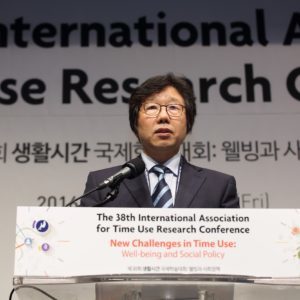 Ki-Soo Eun is Professor of Sociology and Demography, and the Director at the Center for Transnational Migration and Social Inclusion (CTMS) at the Graduate School of International Studies (GSIS), Seoul National University. He received a PhD in sociology from the University of Pennsylvania. His research interests include: low fertility and aging, family history, family values, transnational migration, care and care work, time use study and quantitative method. Prof. Eun has led the Comparative Asian Family Survey (CAFS) project together with Prof. Emiko Ochiai of Kyoto University in Japan, which conducted family surveys in Thailand, Vietnam, Malaysia, India, Qatar and Turkey. Since 2017, he has been engaged in an international project on care economy (CWE-GAM project), representing the Korean team. He is in charge of KOICA Gender and Development Program at GSIS as the Program Manager. Prof. Eun is also an expert on time use research with publications and articles on work-life balance, time poverty, study time, and sleep. He leads comparative studies on time use across countries. Prof. Eun currently serves as Vice President of International Association for Time Use Research and a founder and current President of the Korean Association for Time Studies. He is President of the Population Association of Korea and the Korean Social History Association, as well as Vice President of the Korean Family Studies Association. At Seoul National University. He also serves as Vice Director at the KyujanggakInstitute for Korean Studies. Prof. Eun is a member of the Presidential Committee on Aging Society and Population Policy (PCASPP) in Korea.
CWE-GAM Working Group: Understanding and Measuring Care
CWE-GAM Working Paper Contributions: Care Arrangement and Activities in South Korea: An Analysis of the 2018 Care Work Family Survey on Childcare and Eldercare
CWE-GAM Methodology Report Contributions:
“The Qualitative Methodology and Survey Instruments: South Korea Field Work”– Hyuna Moon, Seung-Eun Cha, Ki-Soo Eun, Eunhye Kang & Ito Peng
CWE-GAM Blog Contributions:
Care Arrangement and Caregiving Activities in South Korea: An Analysis of 2018 Care Work Family Surveys on Childcare and Eldercare, Measuring the Overall Strain of Caregiving: A Multidimensional Approach